Reflective Egg
A solo exhibition of paintings reflecting on grieving my mother
September 20 - October 18, 2026
Kalina Winters
Reflective Egg
Sept. 20 – Oct. 18, 2026
Death reflects slickly as polished black marble. I am the great constant, presence of
absence, all come under me. With her exhibition Reflective Egg opening at Marvin Gardens on
Sunday September 20th Kalina Winters presents a series of paintings that are an elegy for her
mother. Staring directly into the darkened heart, the blunt formlessness of death, she leads us
into the cemetery, but not without humility. In the wake of her mother’s passing Winters has
eased up on geometric scrutiny in favor of the ephemeral. In these new paintings you can feel
the drip of time alongside the resiliency of playfulness and hardcore curiosity. Sadness is made
sensual through the satisfaction of a single sitting painting. A good painting will tell you how
pleasurable it was to make.
Prior to this body of work Winters’s painting practice was fractured between absurdist
caricatures rendered in planar geometry and a secondary world of painting scenes from life. The
former was a deeply anxious interior pursuit. The works were rigid and precise, agonizing even,
like late Al Held. On the other hand, working from reference has always been a safe space for
Winters. Painting friends and vignettes from photographs is more like a way to say “I love you,
painting, and thank you.”
Understanding is the acceptance of the unknown. Such is the perplexity of loss, an
undoing of what we thought we knew, a swift shattering of routines. Winters’s work has
progressed through many stages of frustration. When she lost her mother she was broken,
hollowed out. That kind of loss reorients your relationship to time and habit, reminding you that
this life thing is actually really fucking serious. Comfort seeking turns into taking inventory and
restructuring. These paintings visibly carry the urgency of need, and look in many ways as if
they could not not happen. Painting became an exercise in consistency. Winters started and
finished one painting every time she went to the studio, some taking two days. Incrementally
she began rebuilding her relational world.
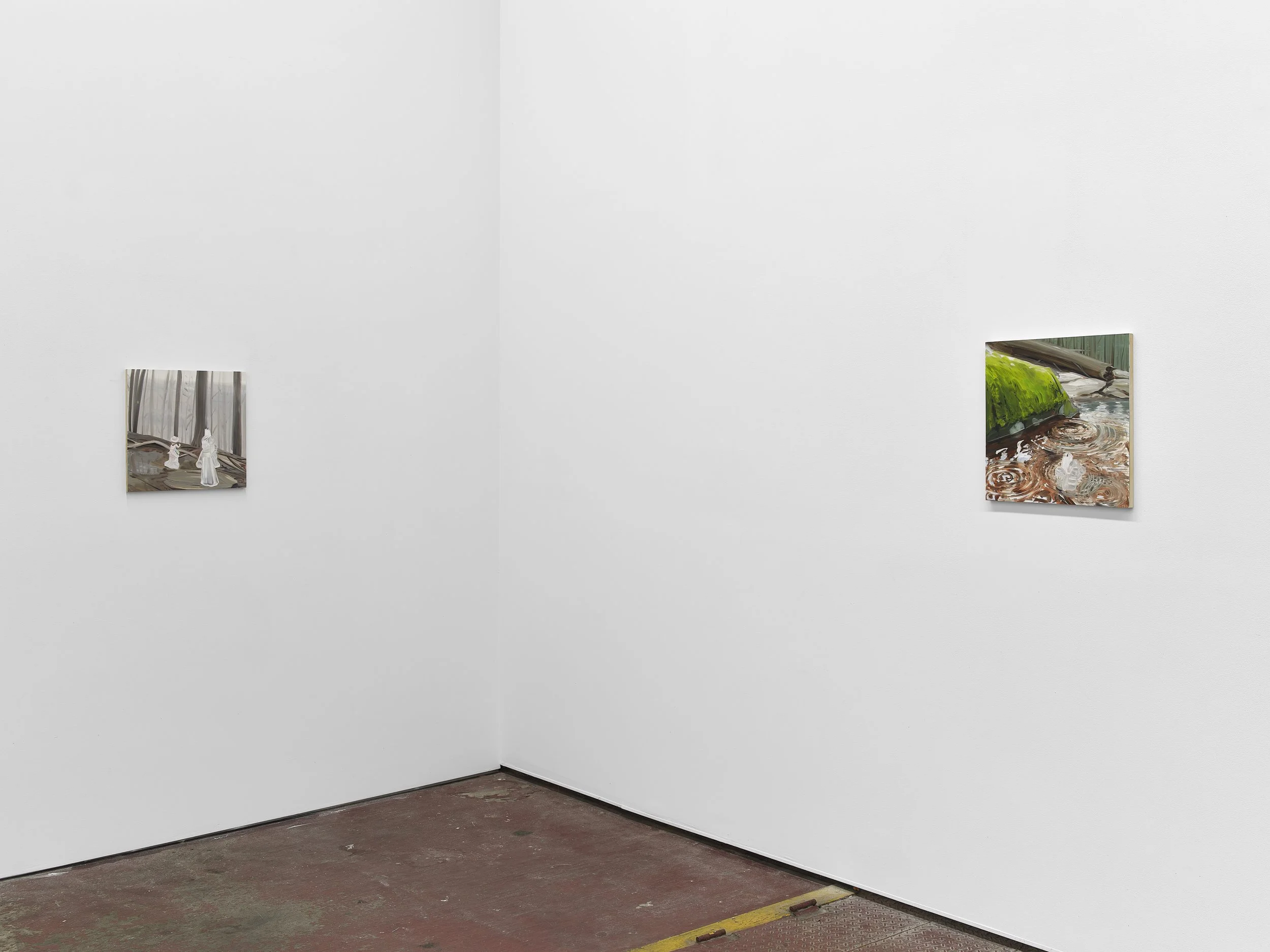
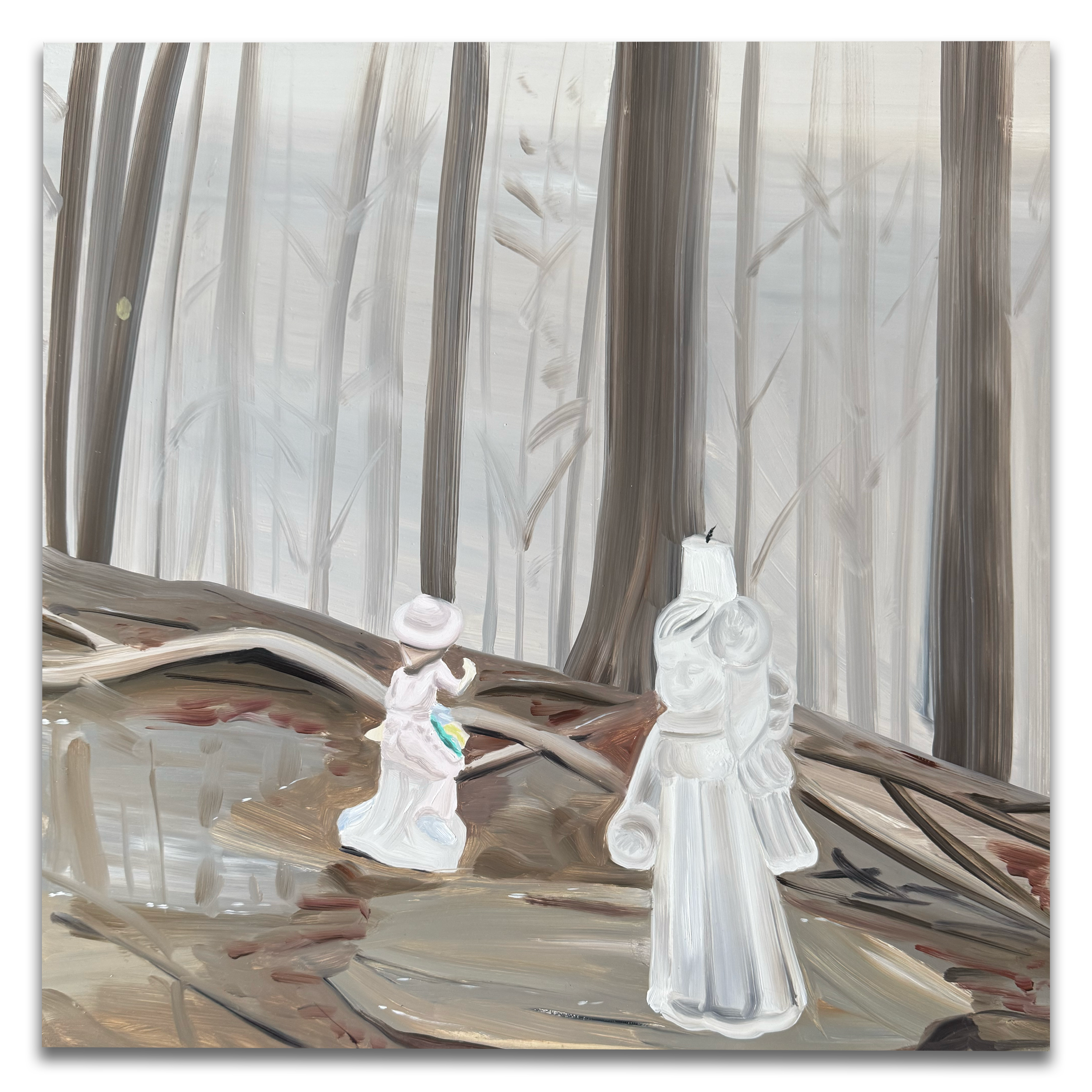
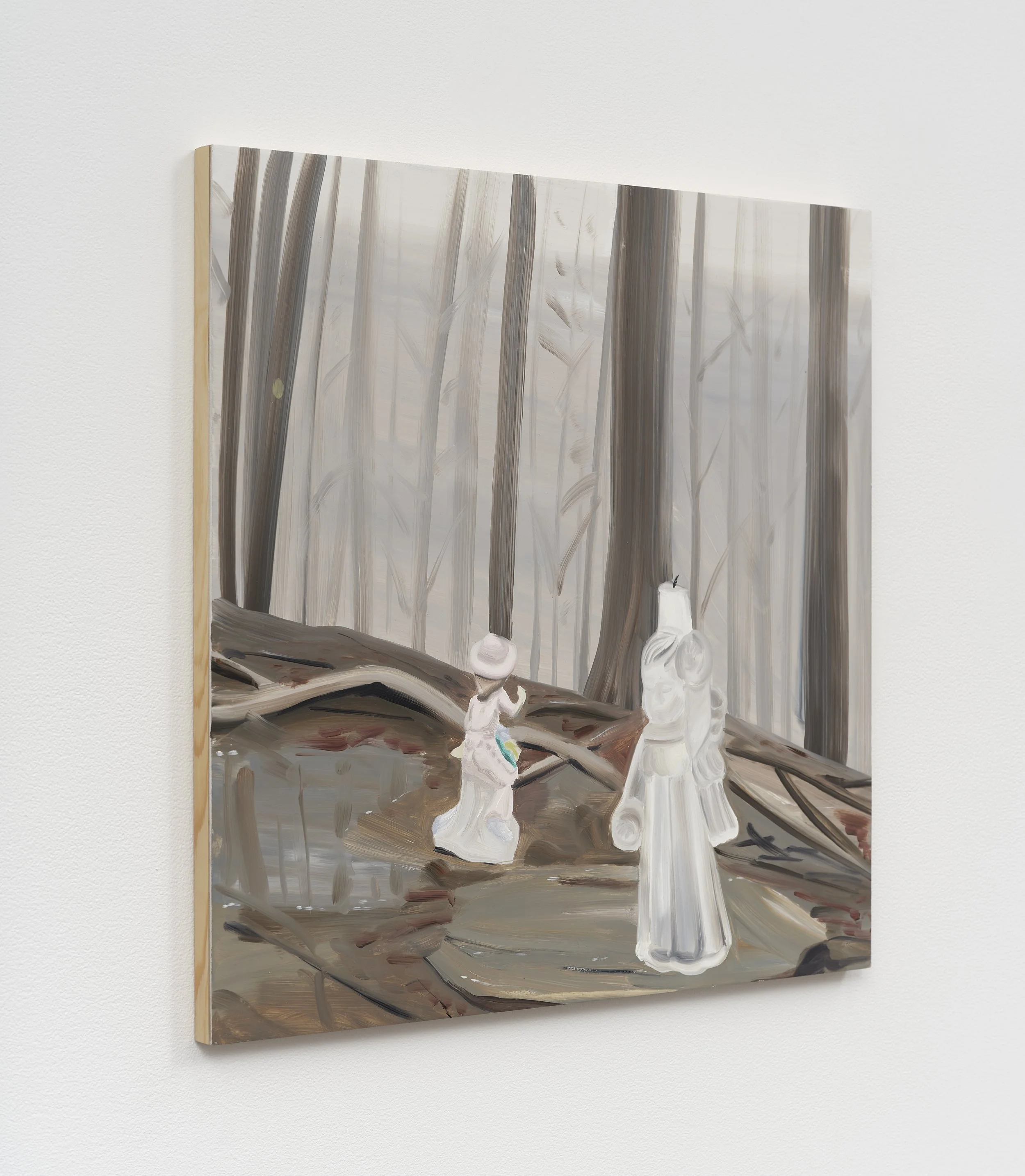
The toys and statuettes in Winters’s paintings are often placeholders for real people or
emotions. Waiving Pair, for instance, includes a glass angel candleholder and a porcelain frou
frou figurine pushing a flower cart. She thrifted both in Woodstock. These objects, possibly
saccharine and interchangeable, are meant to represent Winters and her mother. They seem to
surrender that with the passage of time all things defy beauty. The immaterial weight of loss
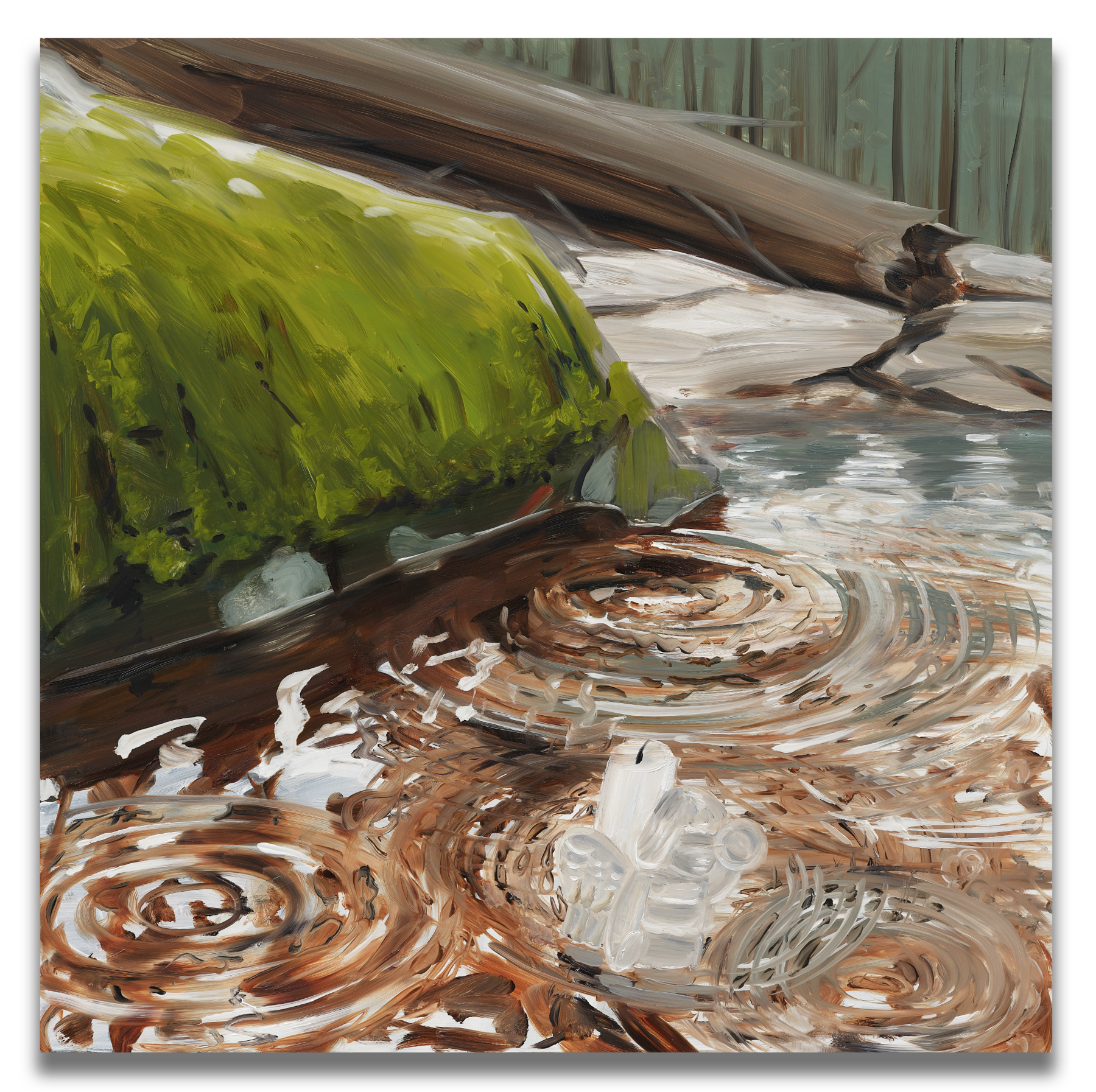
searches for a home in a surrogate. Angel Pool depicts the glass angel too, crossing over, a
flooded repository of tears. The surrogate objects carry aspects of childhood play and the
projection of ritual.
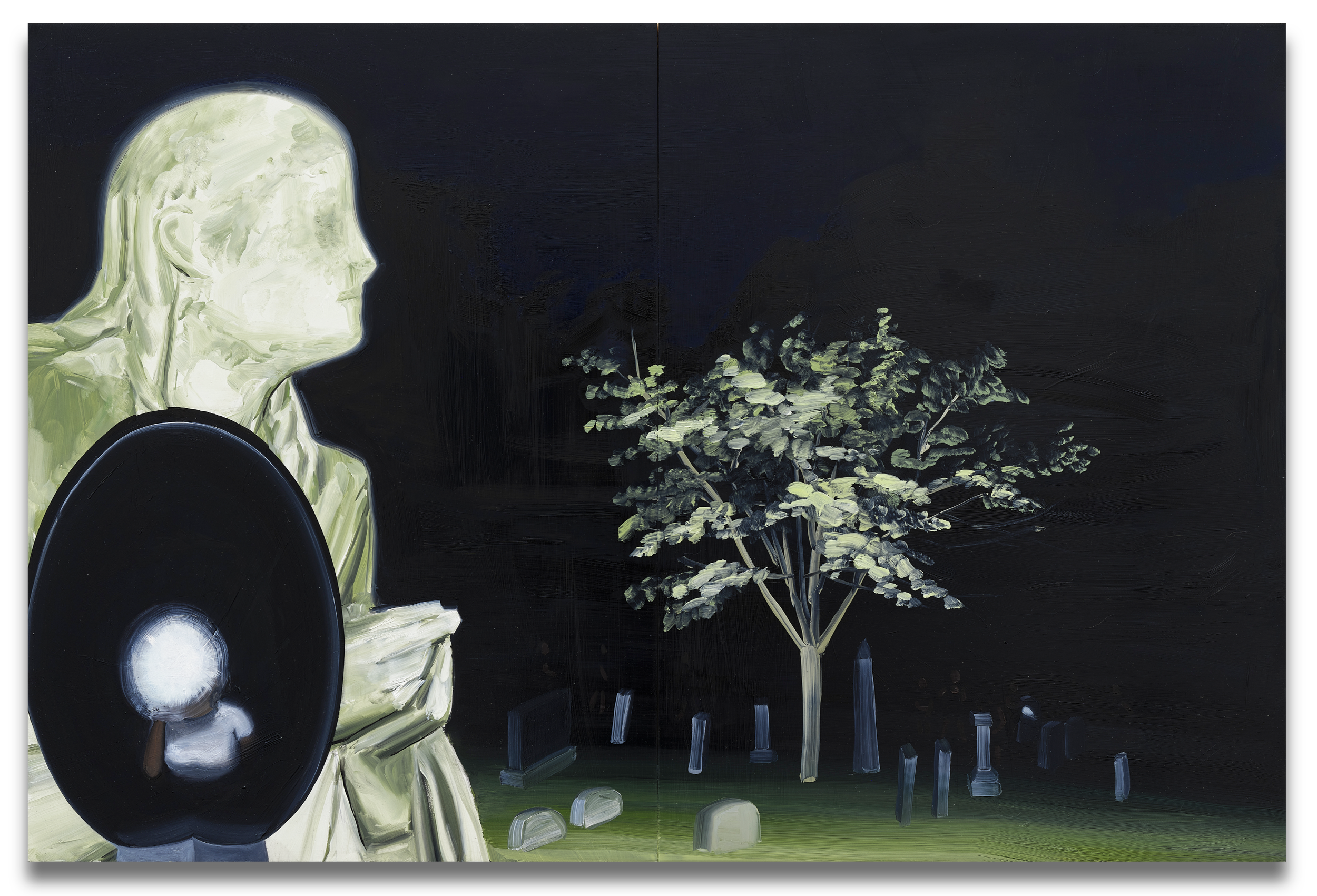
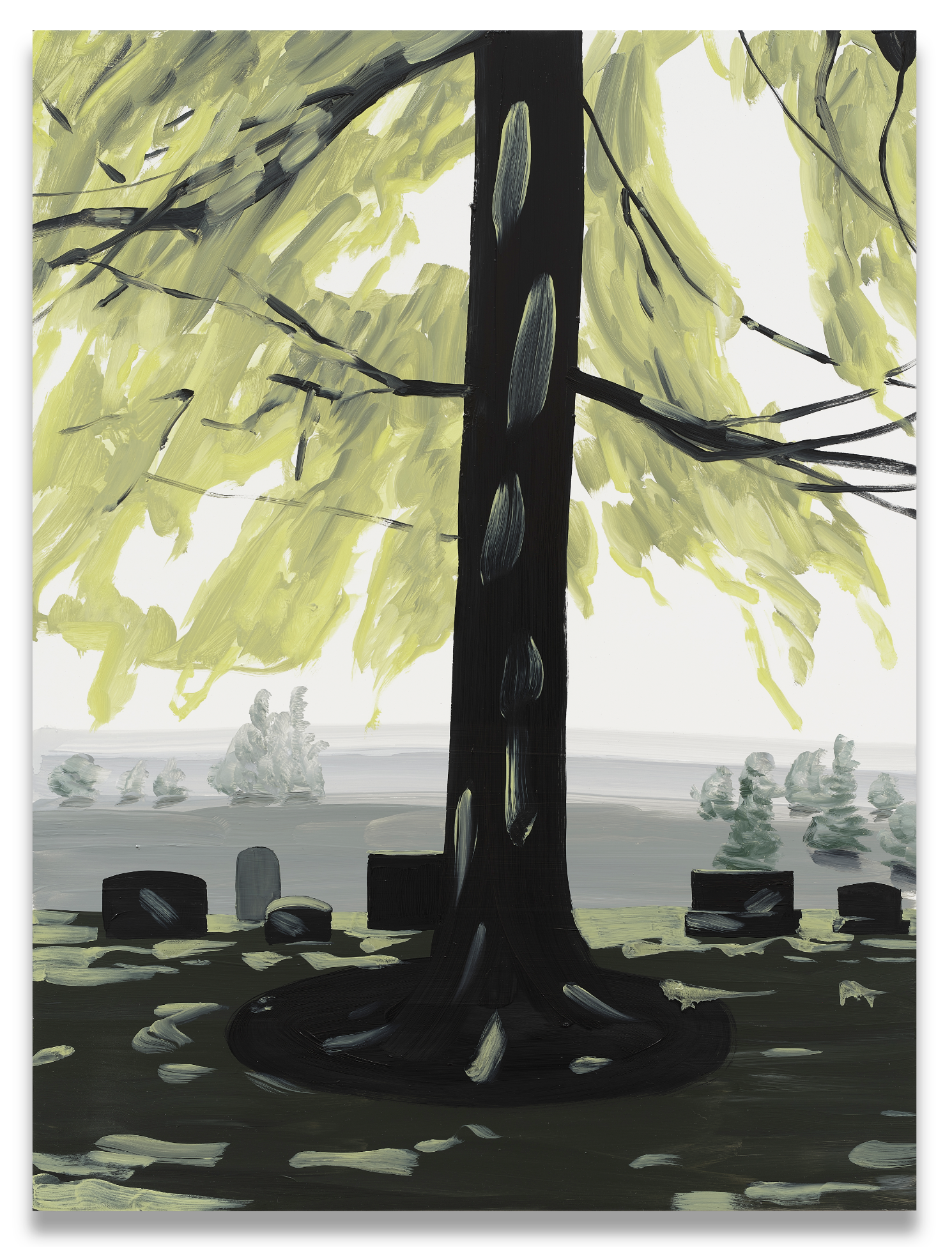
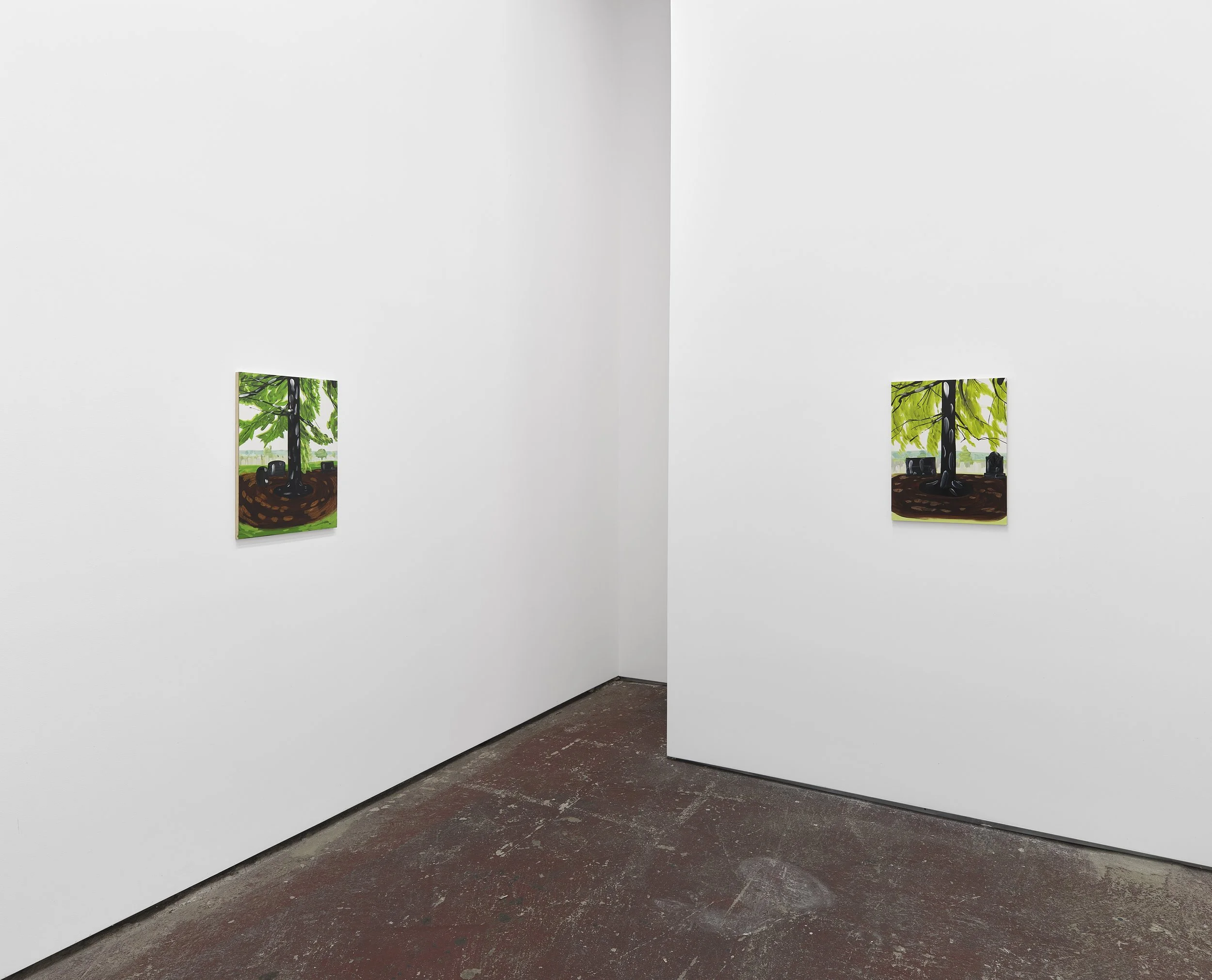
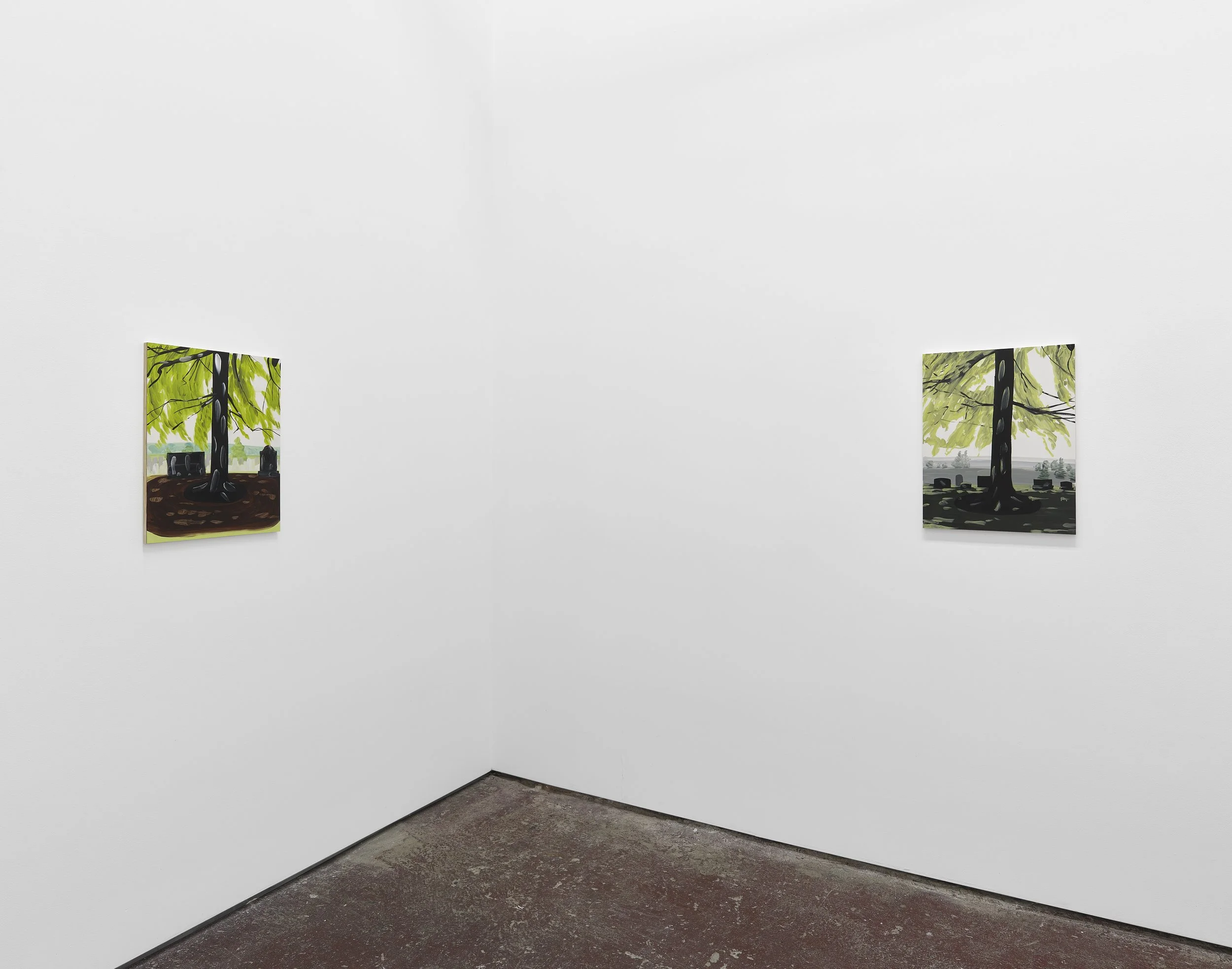
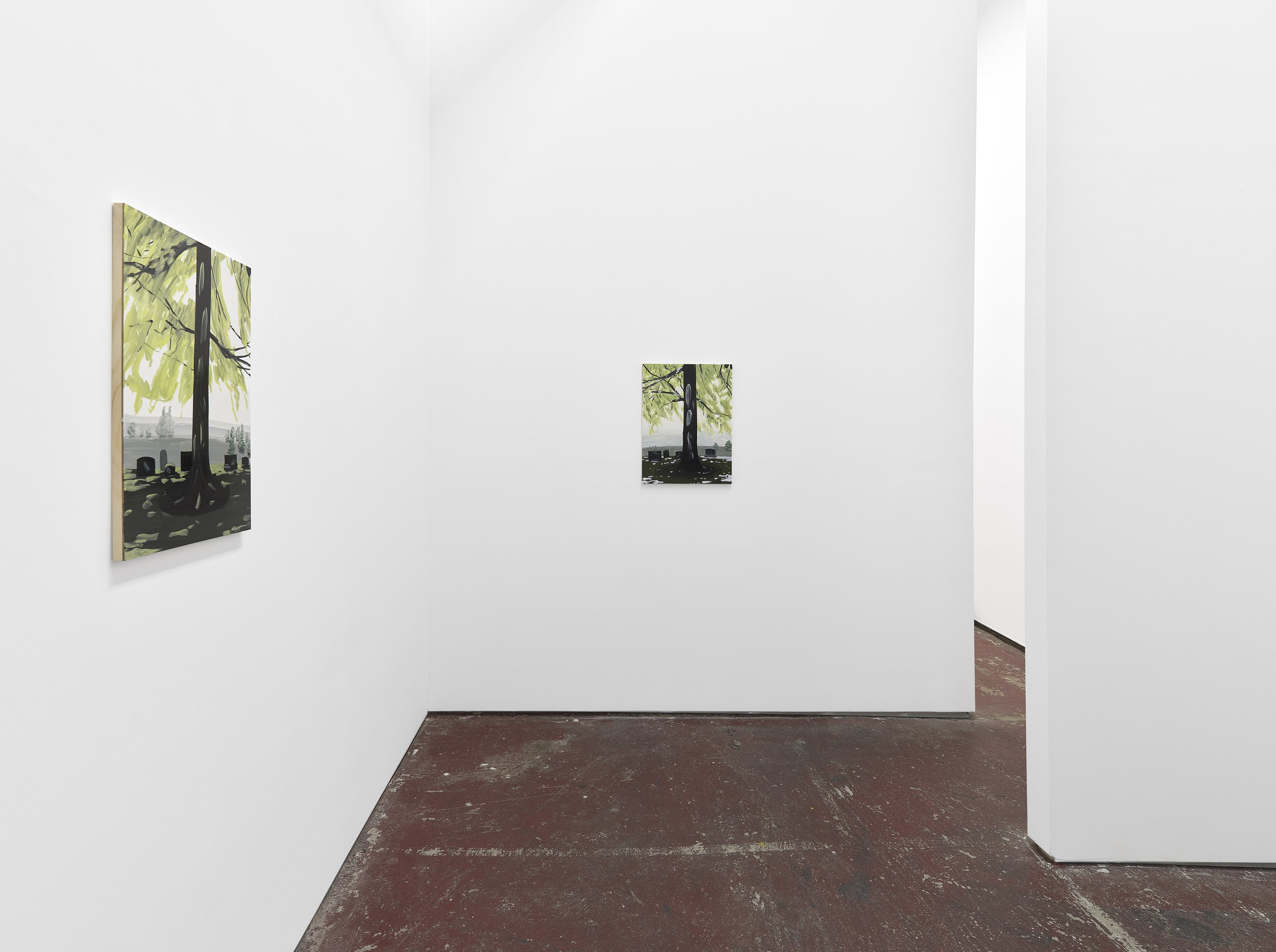
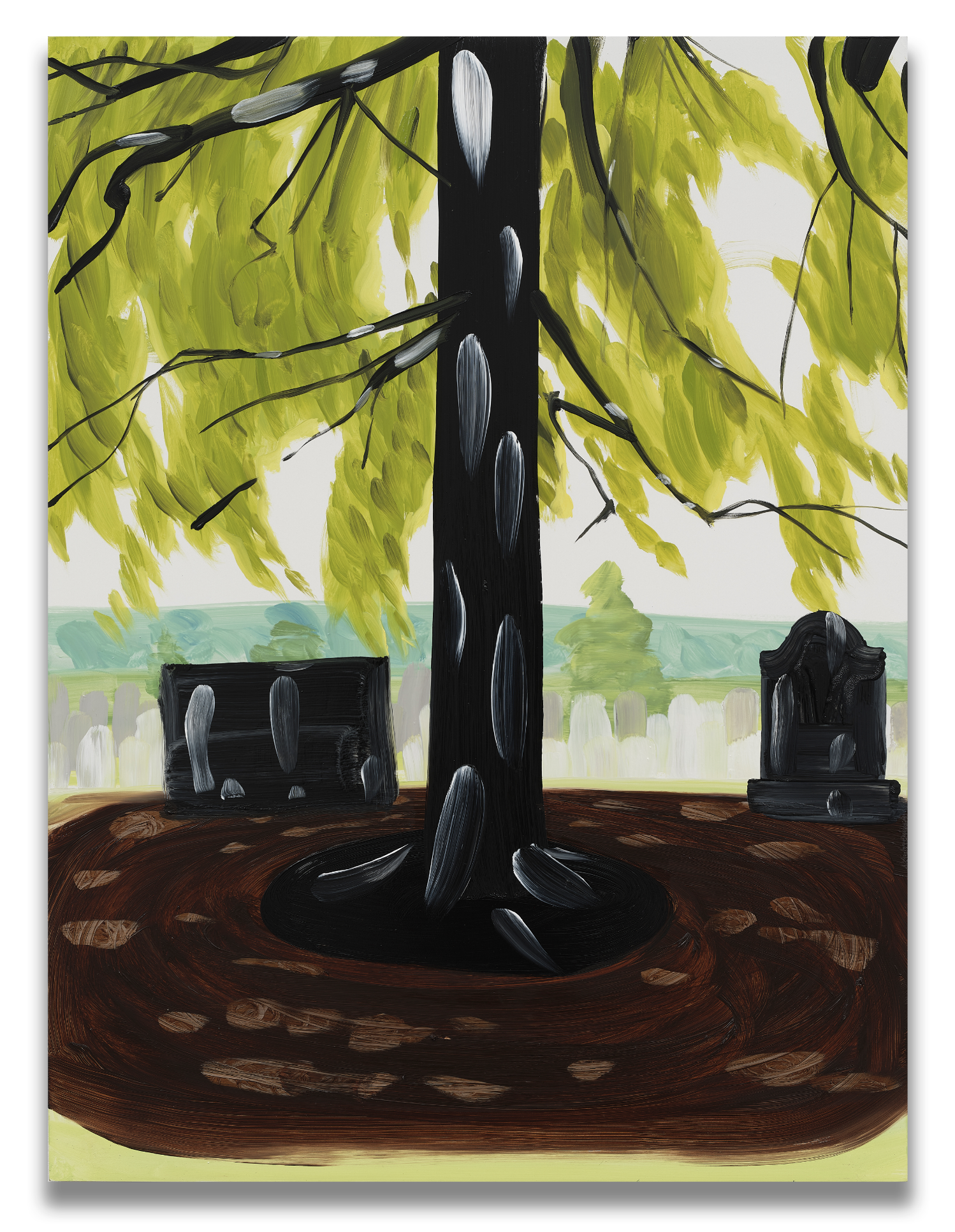
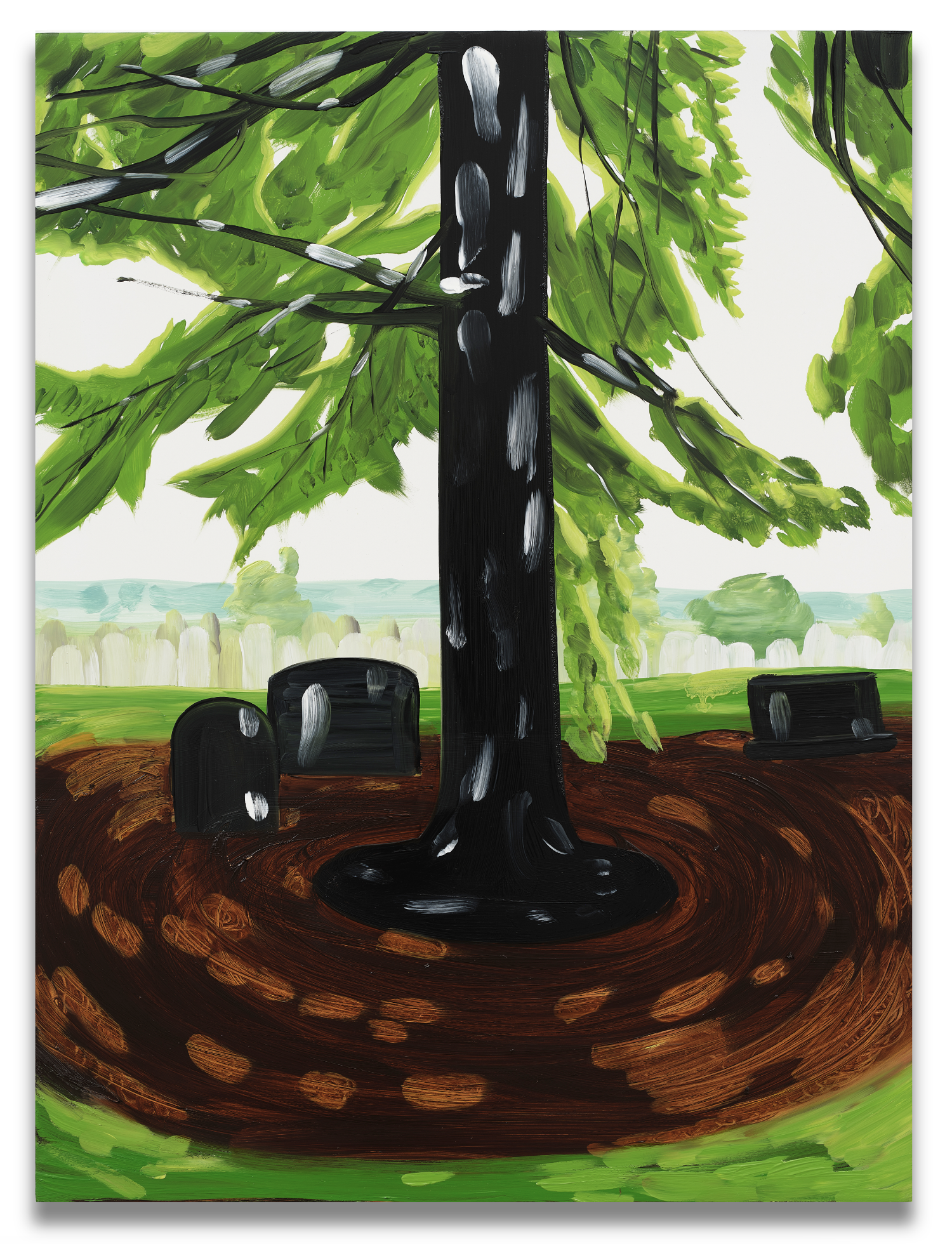
The trees in Winters’s paintings exude growth, a sprawling future often mushrooming
beyond the edge of the panel. The verdant green seems to say that all will be reclaimed. Her
green is a green that reminds us of Fairfield Porter’s greens, without the aristocracy. Death is
democratic. It’s a green of severe viriditas, fecund and fervid, unsentimental and chaotic. These
trees have little regard for the timescale of humans, they bring perspective to loss, suggesting
the incontinence of nature. Sometimes their posture would seem to conquer, other times to
comfort.
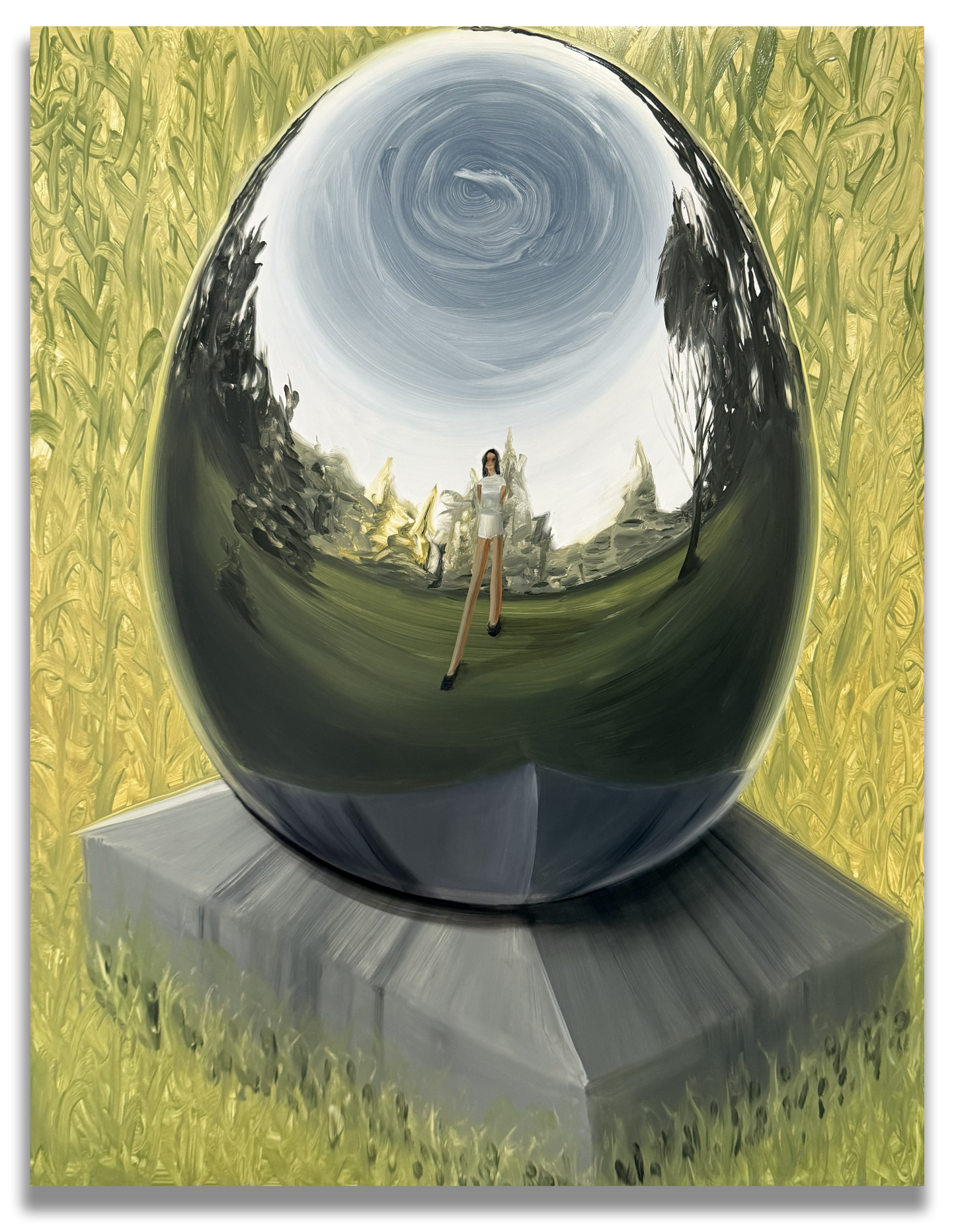
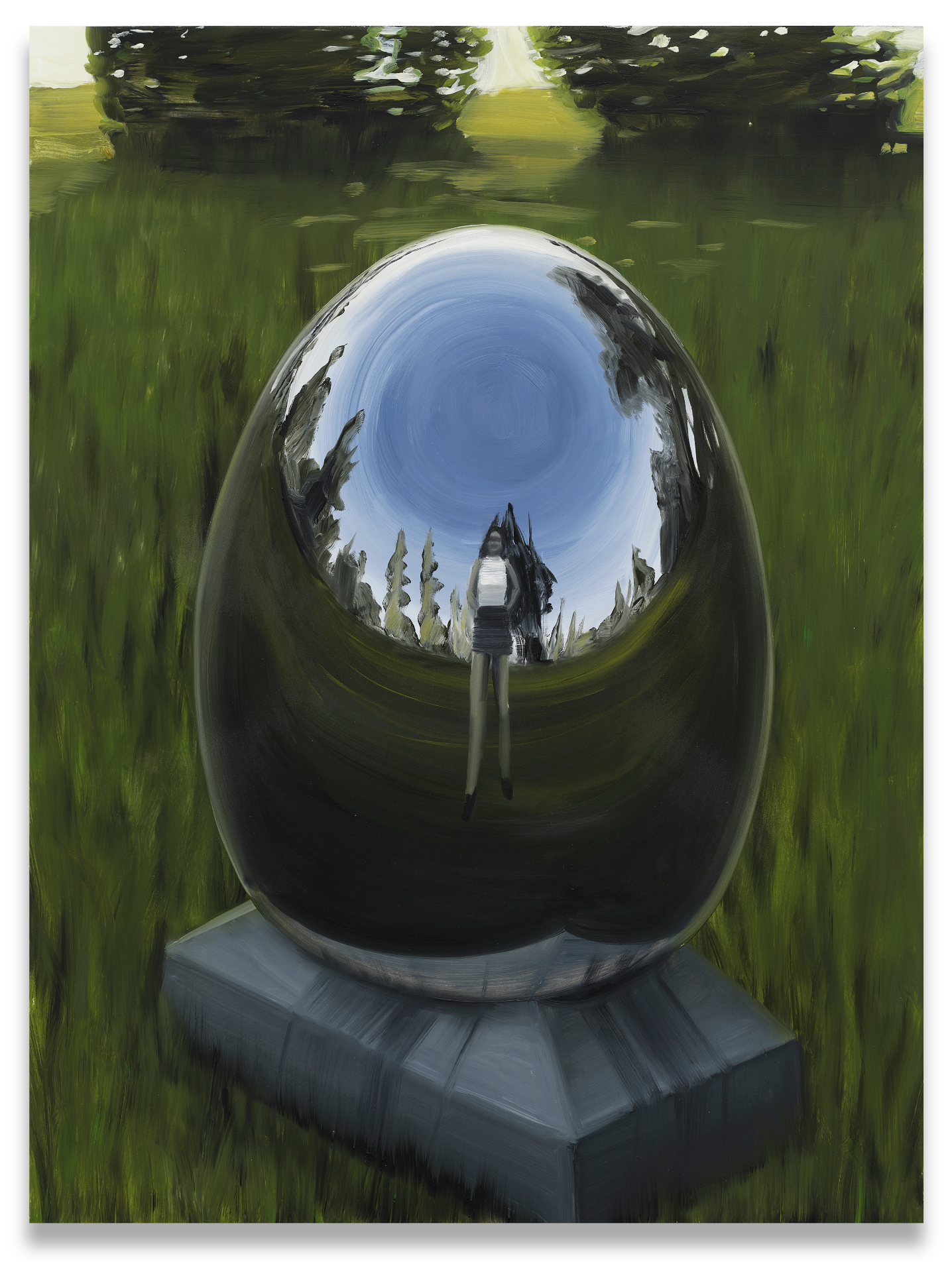
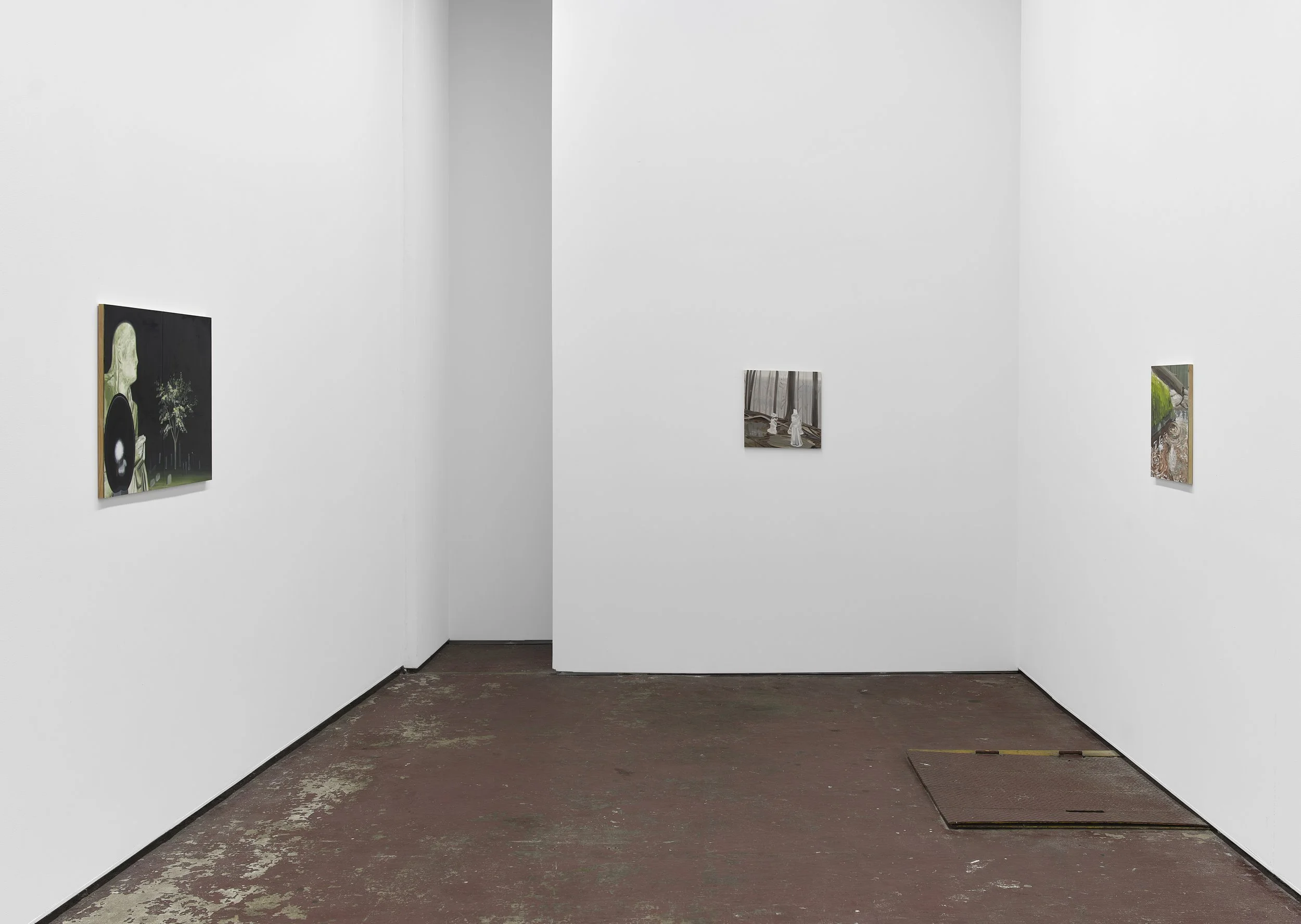
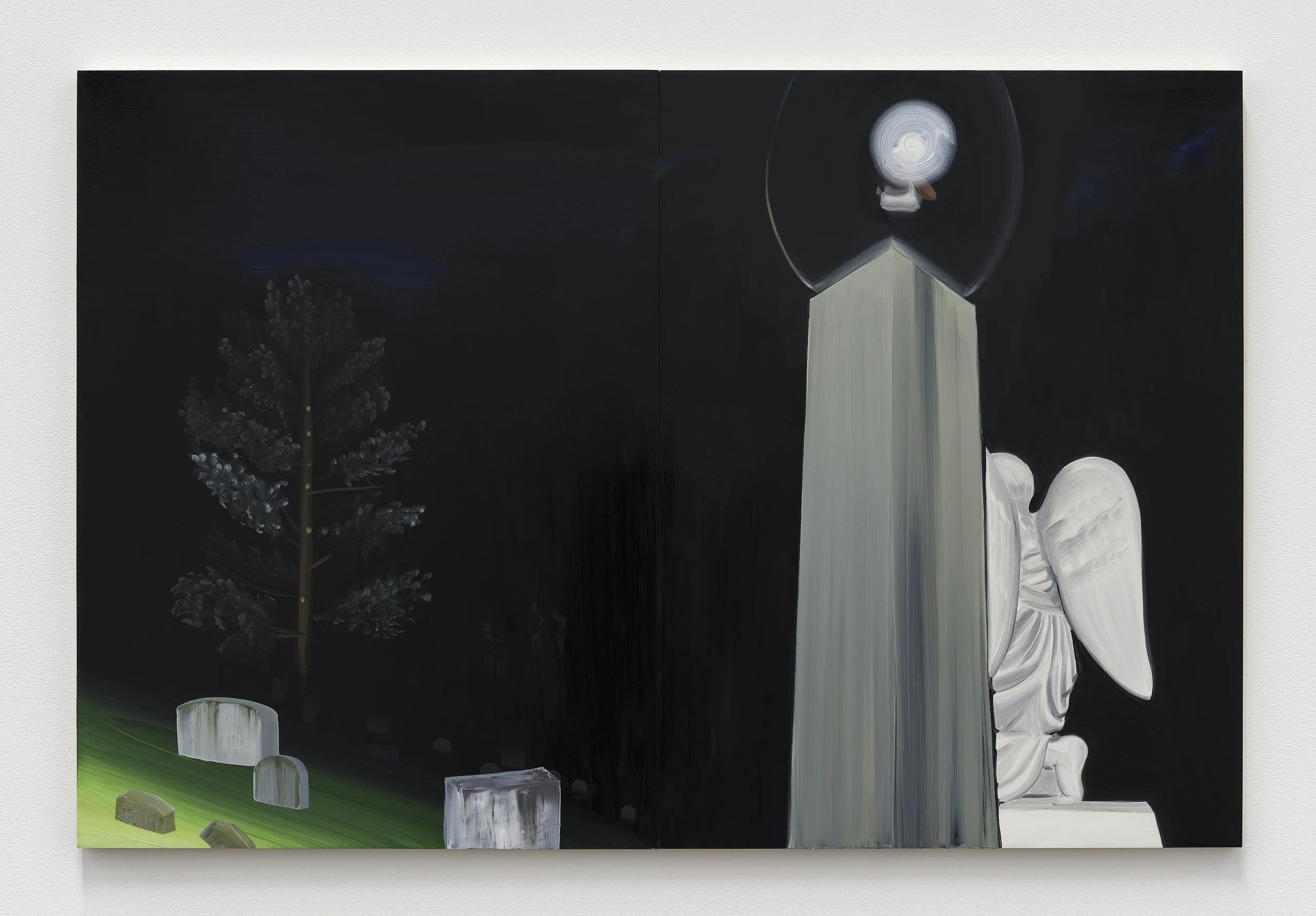
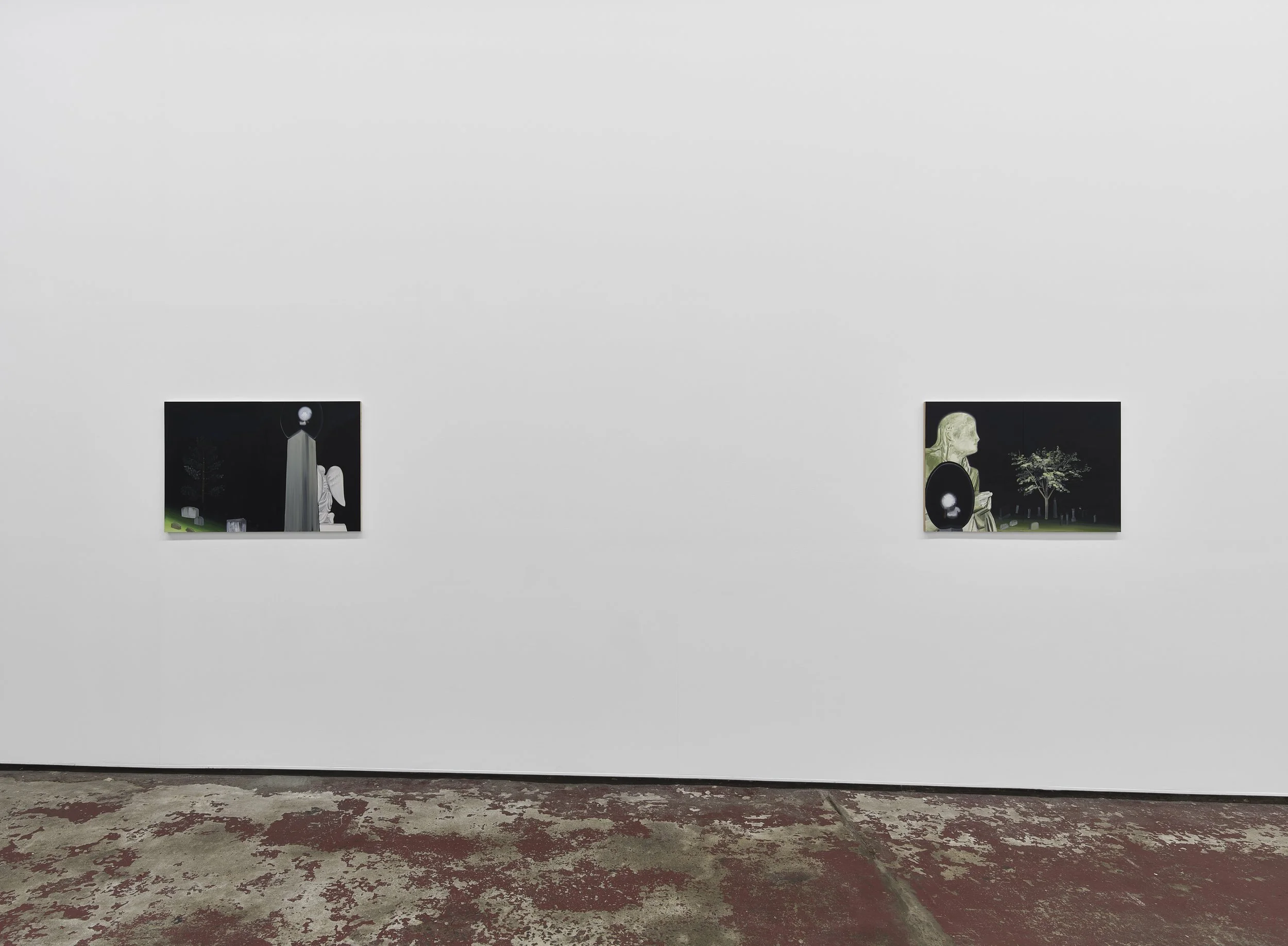
The black egg is the punctuating language of the exhibition. Occurring three times it is a
monument that anchors and suspends. The lone figure in Mirrored Egg is Winters, self
portrayed in the reflective surface of the black marble monument. The image epitomizes the
abandonment that death deals, glossy and impenetrable. Winters stands defiantly in wordless
frustration. True black doesn’t naturally occur in nature very much, and with the egg Winter’s
provides an entrance to the beyond that can only be crossed in death. The egg feels open like
an aperture opens to freeze time. The feeling of being left is stilled, blown open and bullet proof
at once, sterilizing the air in transit as in a hospital or airport.
In the other two images where the egg appears, Cemetery Reflection and Egg
Reflection, the surface of the unbreakable monolith shows us the artist’s pleading face obscured
by a phone flashlight. The reflection is hopeless, a desperate search so emotionally
outstretched as to obliterate self consideration. All three egg paintings indicate that the
obsession death offers can consume us totally. They all three point to the Dutch vanitas
paintings which often incorporated mirrors to symbolize the fallacy of attachment to appearance
or expectation because ultimately time blows flesh away.
Though there are exceptions, many of the paintings in the exhibition are reiterative copies of
themselves, suggesting that grief stages don’t proceed linearly and are not easily come to terms
with. Steps on the path may need to be retraced, memory may be avoided or indulgently
embraced. Winters painted some of the images in the exhibition as many as eight times over.
This dedication to process points to its own inevitability and each painting's undeniable need.
This work’s meaning is traced retroactively by the maker. If it is made from a place of truth it
reads like a question instead of an answer. Making this kind of work requires a joyful blindness,
meeting the not knowing completely in the moment. Winters has met it well, conveying
desolation with a cool concision that is obsessive yet unselfconscious. Still it is evident that she
has been able to reflect upon herself through the tears. Grief is a gift if it grows you.
Press Release written by Jack Arther Wood